the charactersWhile I have made a couple of paintings from drawings to see if they translate, I don’t do preliminary sketches.
I tend to think of my paintings as a stage that I put characters onto, with more of a line of intent than a hard script, so that I can see what happens.
A stock cast of characters have popped up and disappeared over the course of the last twenty-five-ish years.
Most of my output seems to be figuring out who these characters are and why I’m interested in them.
Here’s where they come from and what they mean to me so far.
It’s an ongoing thing.
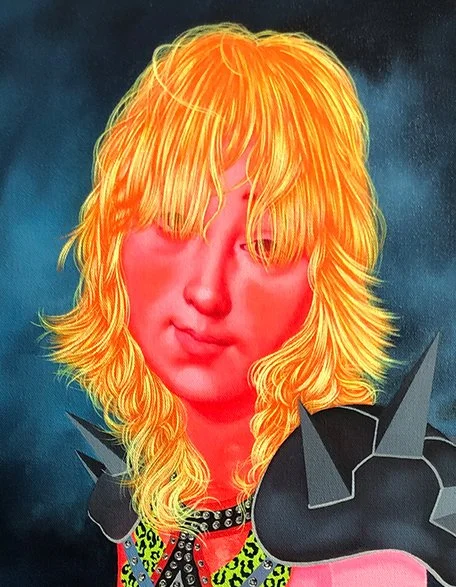
Pink Boy
Pink boy is a romantic 80s hair metal guy that finds himself out of his time and doesn’t quite know what to do with himself.
A personified power ballad, he’s naïve, conflicted in his desire to be both a hyper-male and a pining Romeo, and lives in a permanent full body blush of embarrassment.
His features are a collage of classical painting faces and the hair from an outlier singer in the ultra macho 80s MTV era, the intent being to ask if these archetypes of good taste hold up if they came from a tackier time.
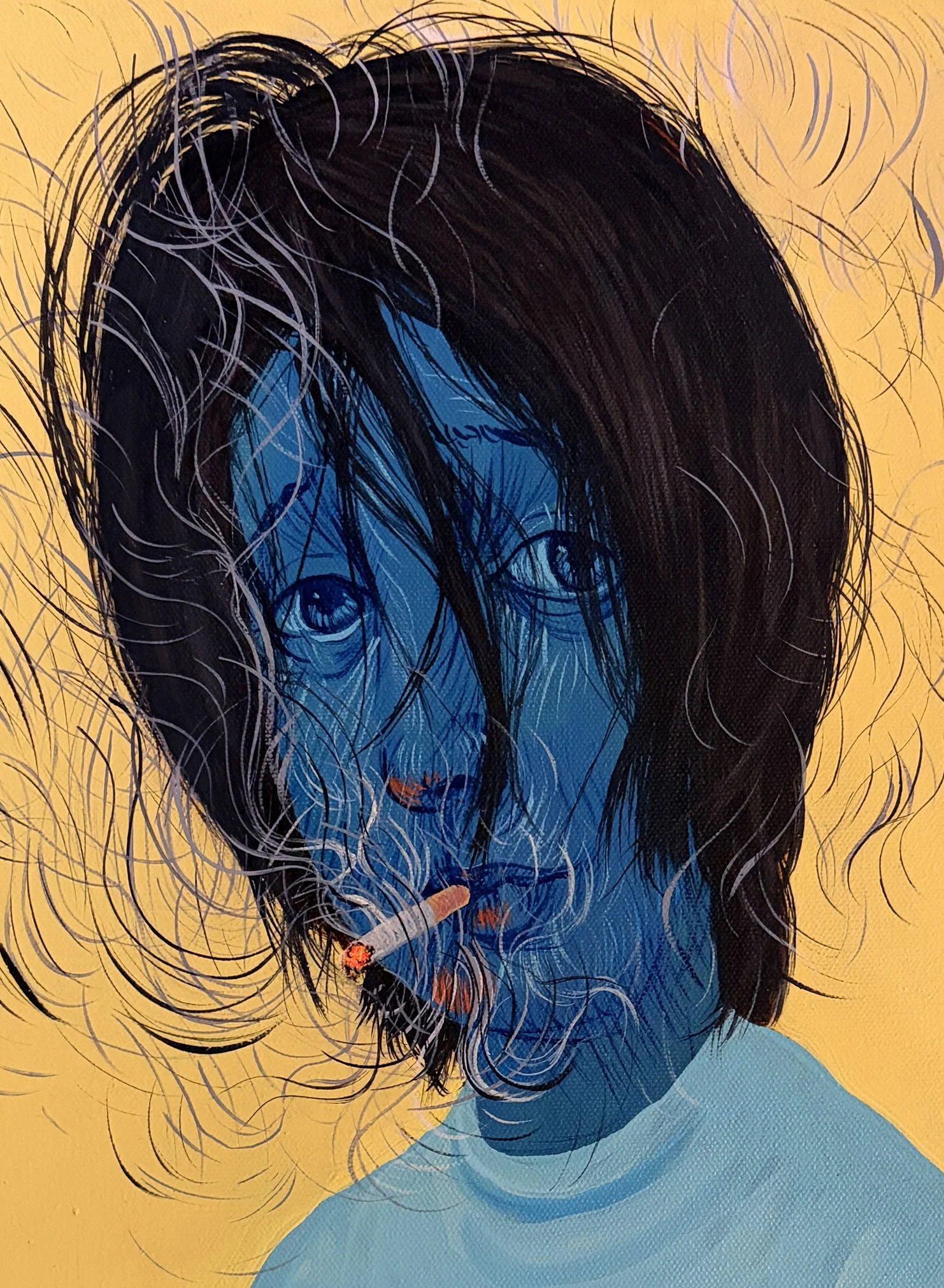
Blue Boy
Blue Boy is a darker, deeply conflicted, jaded, more self aware version of pink boy.
90s irony to 80s naïvety, more Lothario than Romeo.
He knows the evil that lurks in the hearts of men, but doesn’t know how to reconcile that with his sense of self.
Like Pink Boy he is also out of his time, but he’s resigned to our collective fate.
Physically he began as a mix of classical painting faces along with the hair from someone I saw as quintessentially representative of a certain Gen X sensitive male trope.

Gold Girl
Gold Girl is the stereotypical 20th century pop culture American dream girl.
An unattainable myth.
Through no fault of her own, she haunts Pink and Blue Boy, an avatar for a certain kind of false nostalgic promise of America, while she herself seems confused and reluctant about her role and why she’s even here.
Built from appropriated classical painting faces, her hair varies along 70s TV bombshell lines, blonde to brunette, questioning ideas of beauty: what does it say about both the source and the product if a hair swap and pink dress is all it takes to make our perception of an image go from noble to tacky?
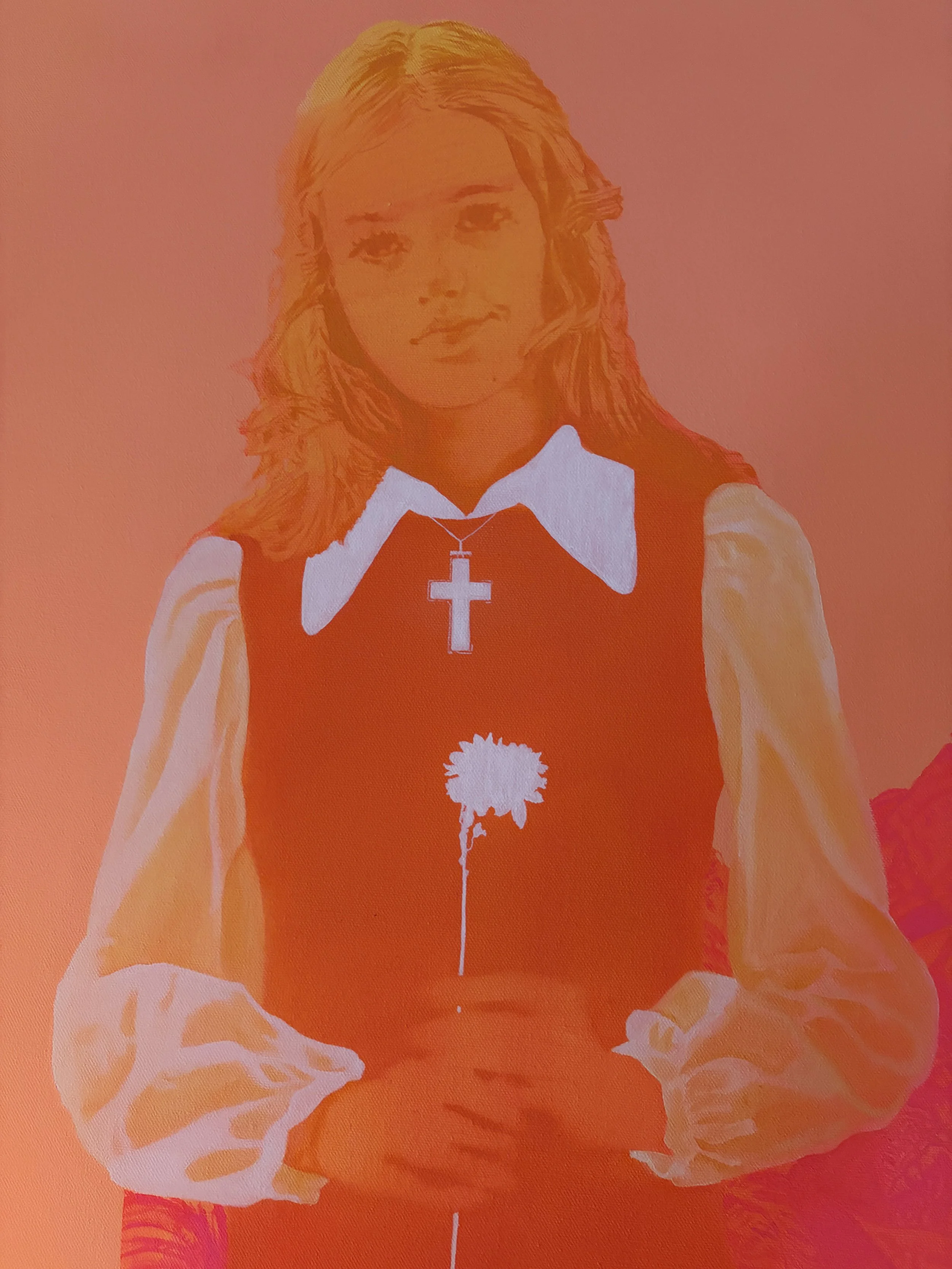
Catholic Girl
Thirty something years ago when I was living in Paris a friend gave me some fantastic vintage French romance photo-novel magazines.
In one was an ad for dress patterns, showing young women in miniskirt dresses with catholic cross necklaces.
What drew my curiosity and ire were the looks on the girl’s faces which I read as a mix of fear, derision and submission, and the headline “Elle sera ravisante, même a l’age ingrat" which translates loosely to “She will be lovely, even in the awkward age”.
I worked with these images for twenty years, one model in particular becoming an ongoing icon of religious and patriarchal hypocrisy, eventually morphing into a disbelieving roughly painted character with Jane Birkin hair.
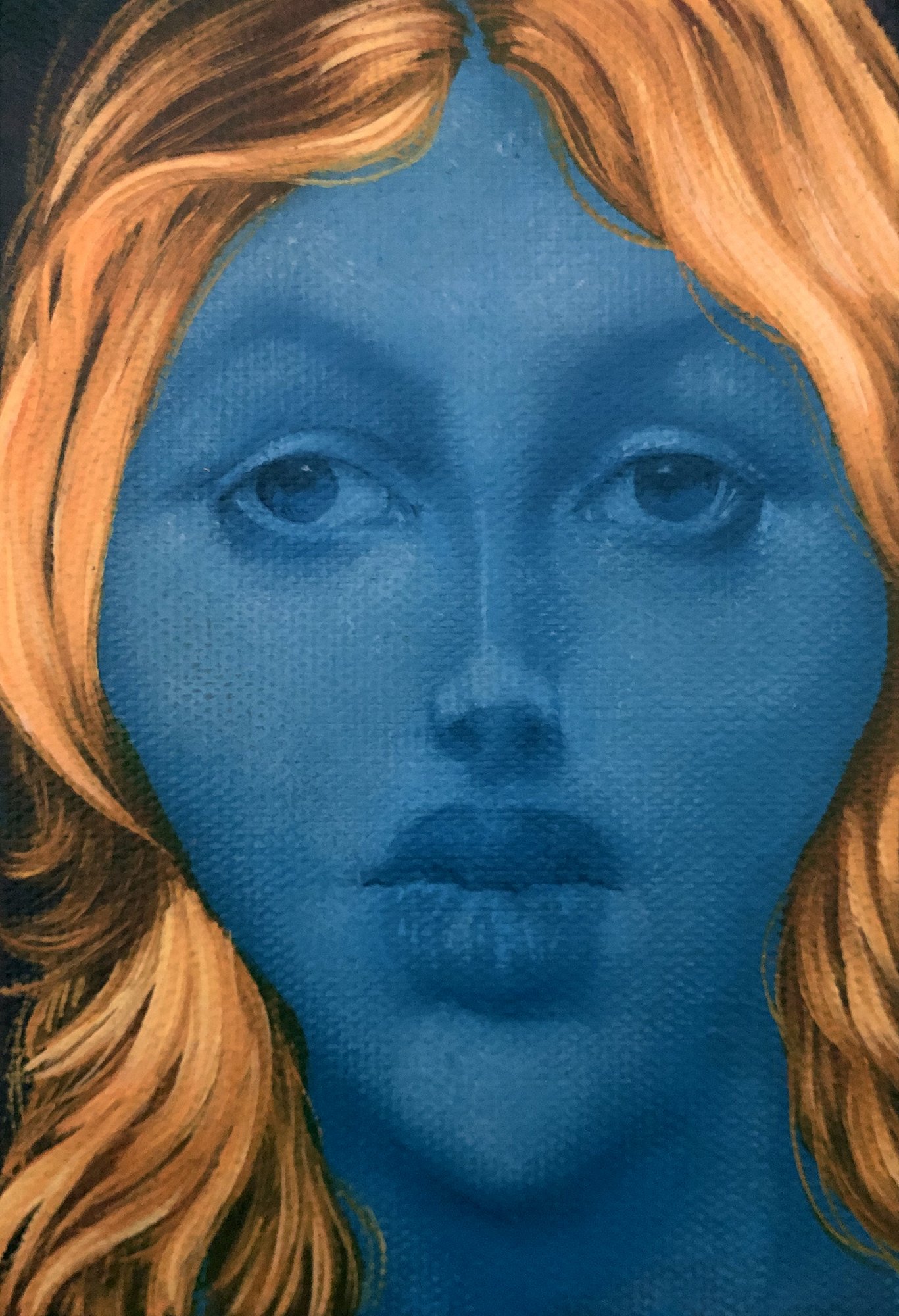
Warps
The Warps are innocence lost, a dark mirror offshoot of Pink Boy and Gold Girl.
The appropriated and photoshop warped faces of these characters became a question about how ideas of beauty shift over time, how the ‘instagram face’ itself would age into history, and the power dynamic between the women and men who desire this particular look.
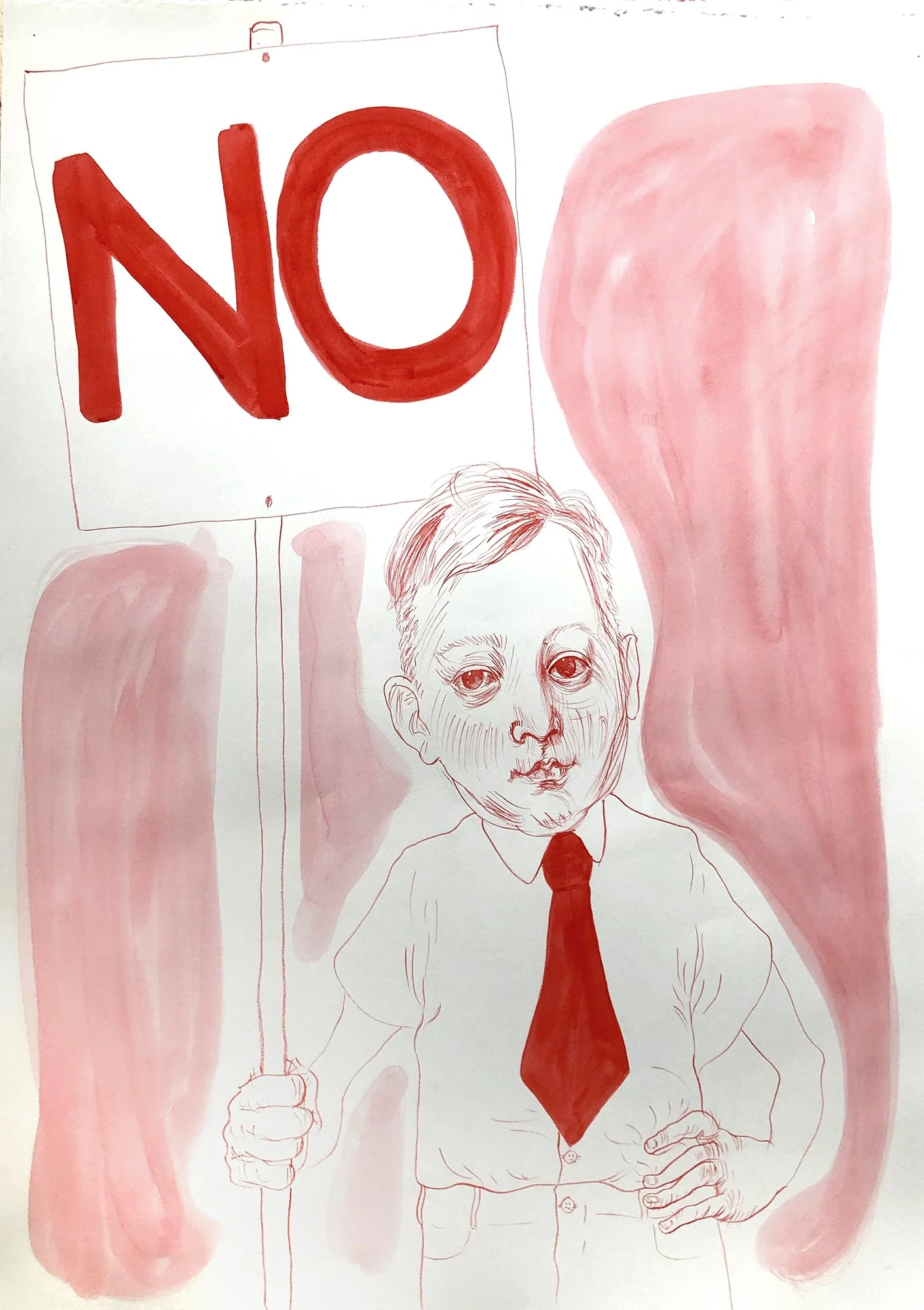
No Boy
A pure negative, No Boy is a combination of a classical art imp with a 1930s nazi youth / 2010s hipster haircuts and a corporate American uniform.
He has no actual ideas or agenda other than to say no to any path forward, and he is either in a romantic relationship with, or pining for, the Warps.
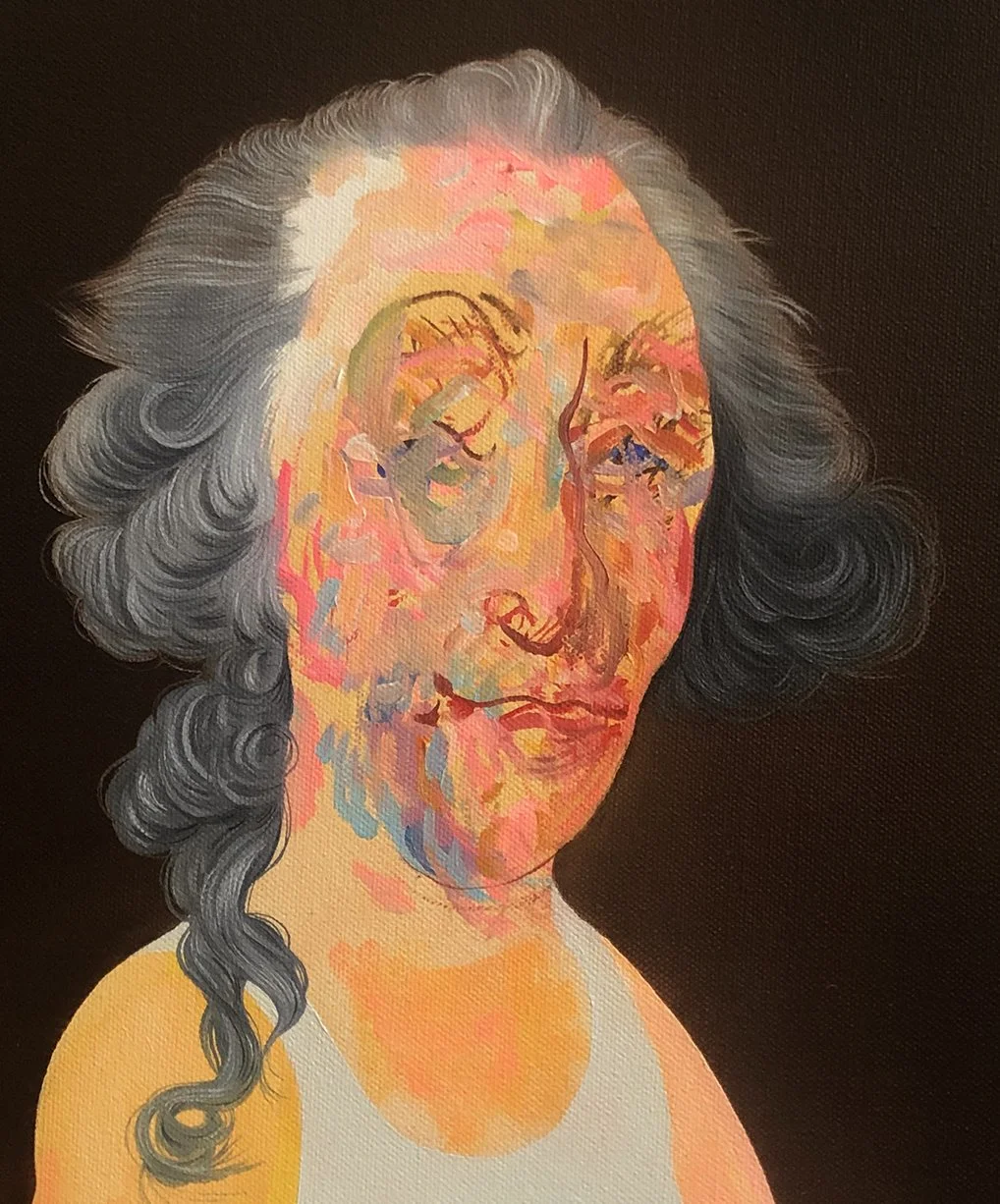
The Undones
This is a character that started in a couple of paintings 25 years ago that I couldn’t get out of my head and popped up again recently.
Originally stemming from my conflict around how to paint uncheesy faces, or if faces should be painted at all, this character is still a mysterious blur to me, a kind of embodiment of unease, maybe from a moment deeper in the past.
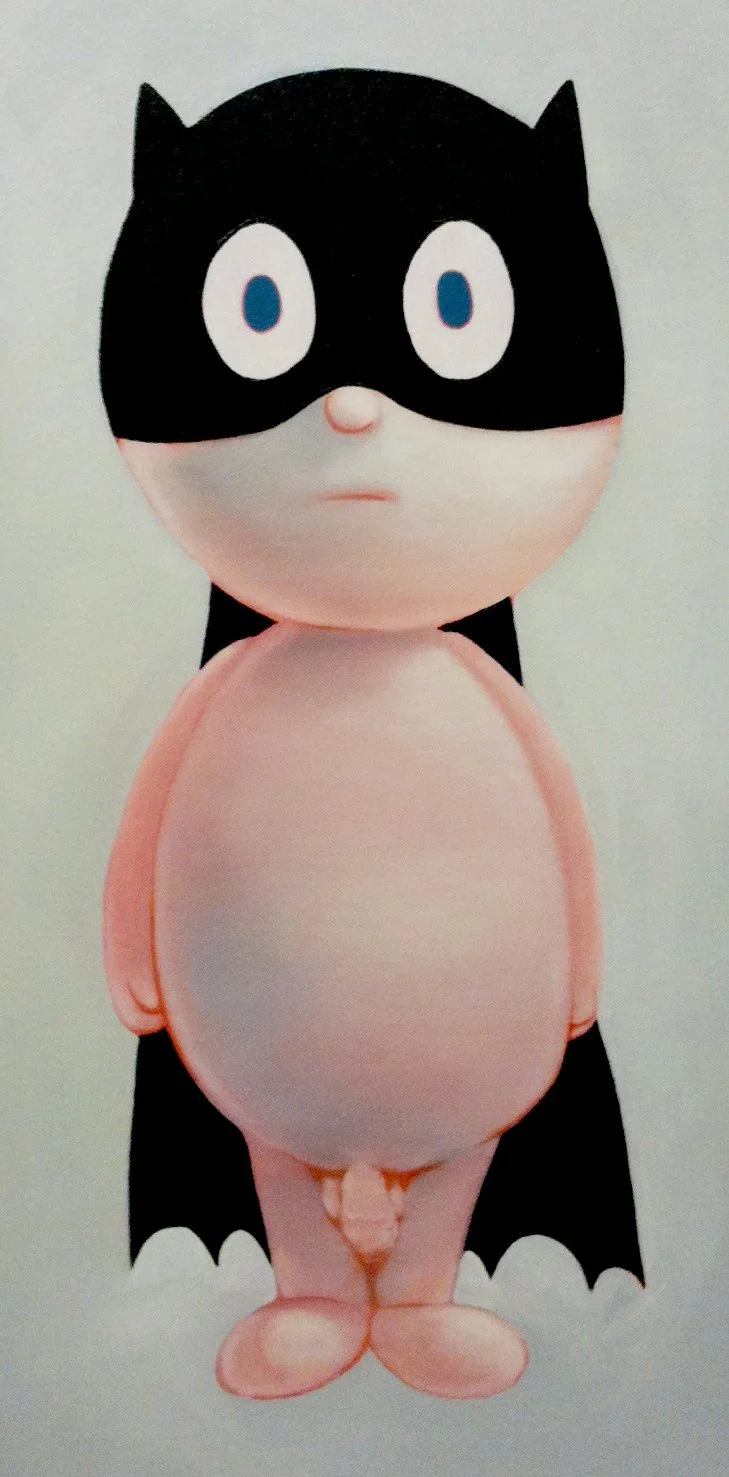
Naked Batman
Another figure that has popped up repeatedly over the last 25 years, this is perhaps the most autobiographic character in the cast.
Stemming from an early childhood memory of having to wear a kindly intentioned but, in my eyes at the time, woefully incomplete homemade halloween costume to school, the Naked Batman is originally all about body / money / social shame.
With each version new layers come up: the hypermasculine costume with the soft body, the naked hero, is he nude despite himself or is he confronting us with his nudity, and as viewers are we to feel empathetic or aggressed?
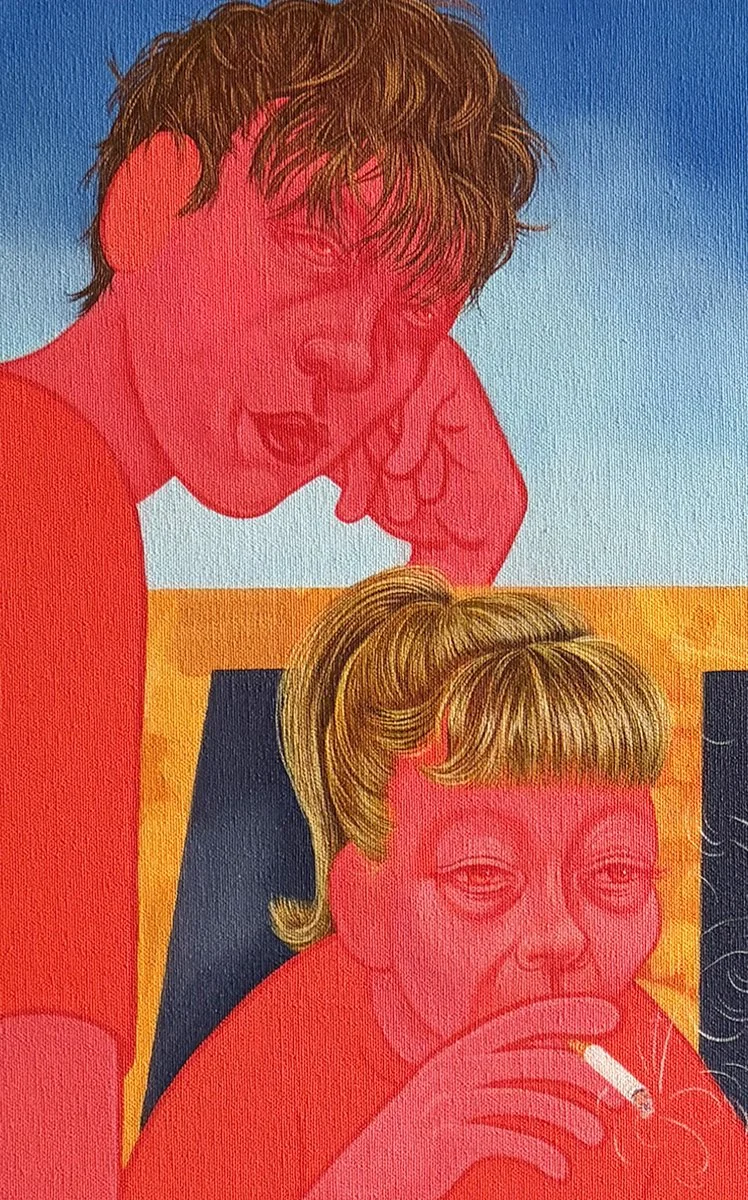
The Couple
The newest cast members, these two flow directly out of the Last Hipster series and Blue Boy before that.
In particular, they sparked from a vignette in one of the ‘scene’ multiple-image paintings of a bucolic but perhaps doomed rom com, he the tired hipster, she the jaded worn out all-American dream girl.
Something about the dynamic of the couple (along with the twee idea of romance as a painting subject) intrigued me and they became their own spin-off.
This is an ongoing series, so the characters are evolving but just as I saw the Last Hipsters being the last of their kind at the end of time, part of me thinks of these two as somewhat of a reverse Adam and Eve, at the end of humanity rather than the beginning.
Or maybe Adam and Eve never died and are alive and well living in Bushwick still trying to make it work as they sit around eating apples.